Cranial Osteopathy Explained
Cranial osteopathy, also known as osteopathy in the cranial field (OCF) refers to a particular style of osteopathy that targets treatment around the head of the patient with the goal of improving a number of conditions and symptoms. At Medela Osteopathy & Co we use cranial osteopathy in our Tweed Heads clinic whenever we see a necessity for it. Cranial osteopathy can be a tricky subject as there is some controversy around its use in practice as well as its scope. This article will give you a crash course in OCF, what it is for and the different styles that can be used in OCF treatment.
Cranial Osteopathy vs. Cranio-Sacral Therapy
Whats the difference between OCF and cranio-sacral therapy? Well while cranial osteopathy is taught in the osteopathy degrees at university (both the bachelors and masters degree) cranio-sacral therapists may have only completed a weekend course (that can be completed by anyone) in order to learn their methods. Its worth being cautious about the qualifications of your chosen practitioner as cranial treatments are a subtle set of techniques that take significant practice to master.
Cranial Theory - Movement of the Cranial Bones
All of cranial osteopathy theory revolves around the pliability of the skull bones. Healthy bones are not steel beams, they have a considerable amount of flex in them that supports a myriad of functions. The bones of your skull are no different. You skull is made up of 22 bones, many of which become strongly fused together during childhood. While the fusion of these bones is strong, the fissures allow for a certain amount of flexing and sheering to occur. The rhythm that these bones flex in is know as the cranial rhythm and it is an important mechanism your skull uses to rhythmically pump fluid around your skull. When the mobility in these bones is disrupted it can effect the pumping mechanism and thus interrupt the movement of fluid. This can have symptoms that include headaches, migraines, upper neck pain and can even contribute to jaw problems given the many attachments shared between the jaw and cranial muscles.
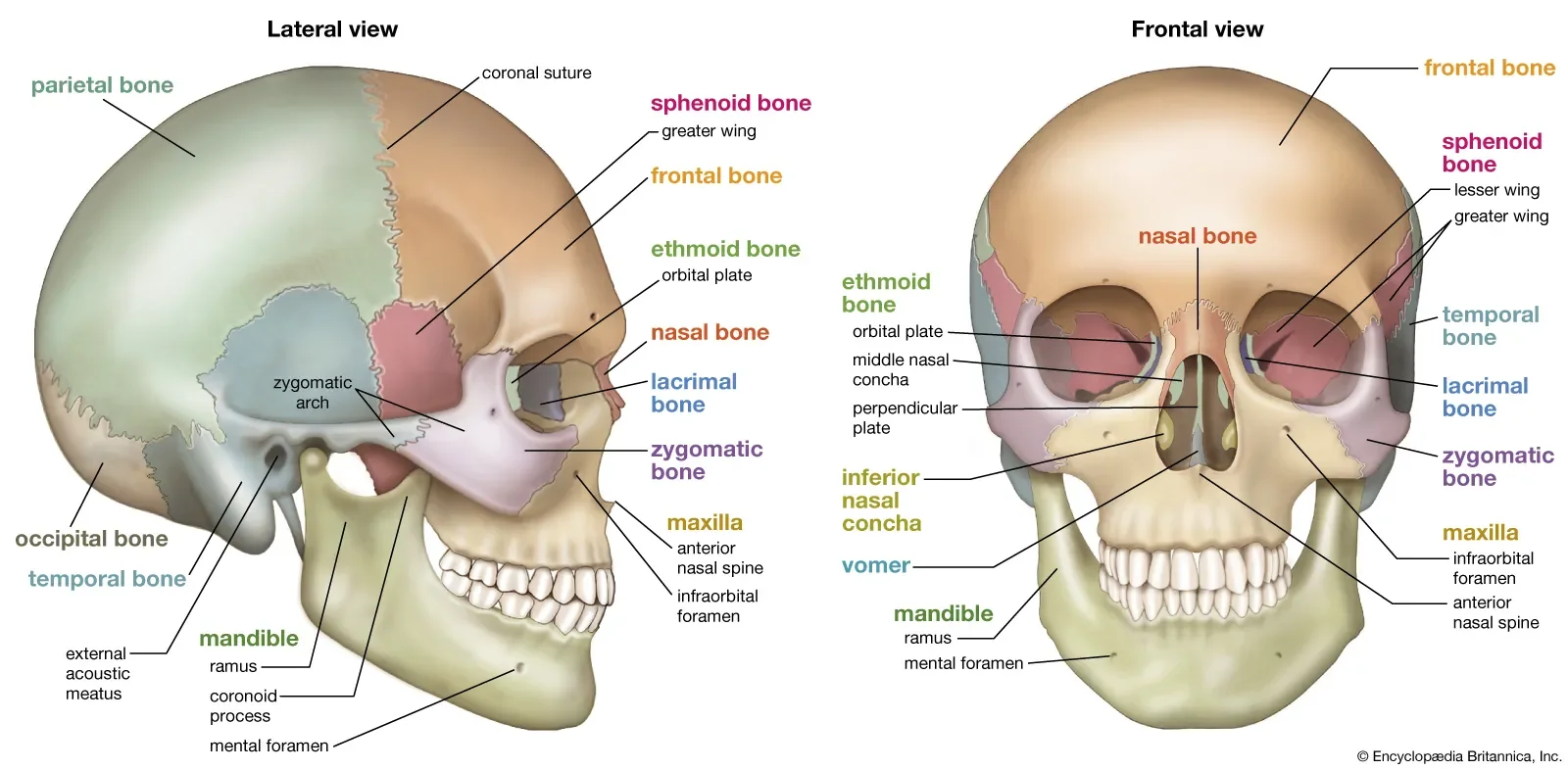
Cranial bones with their various sutures (fused joints).
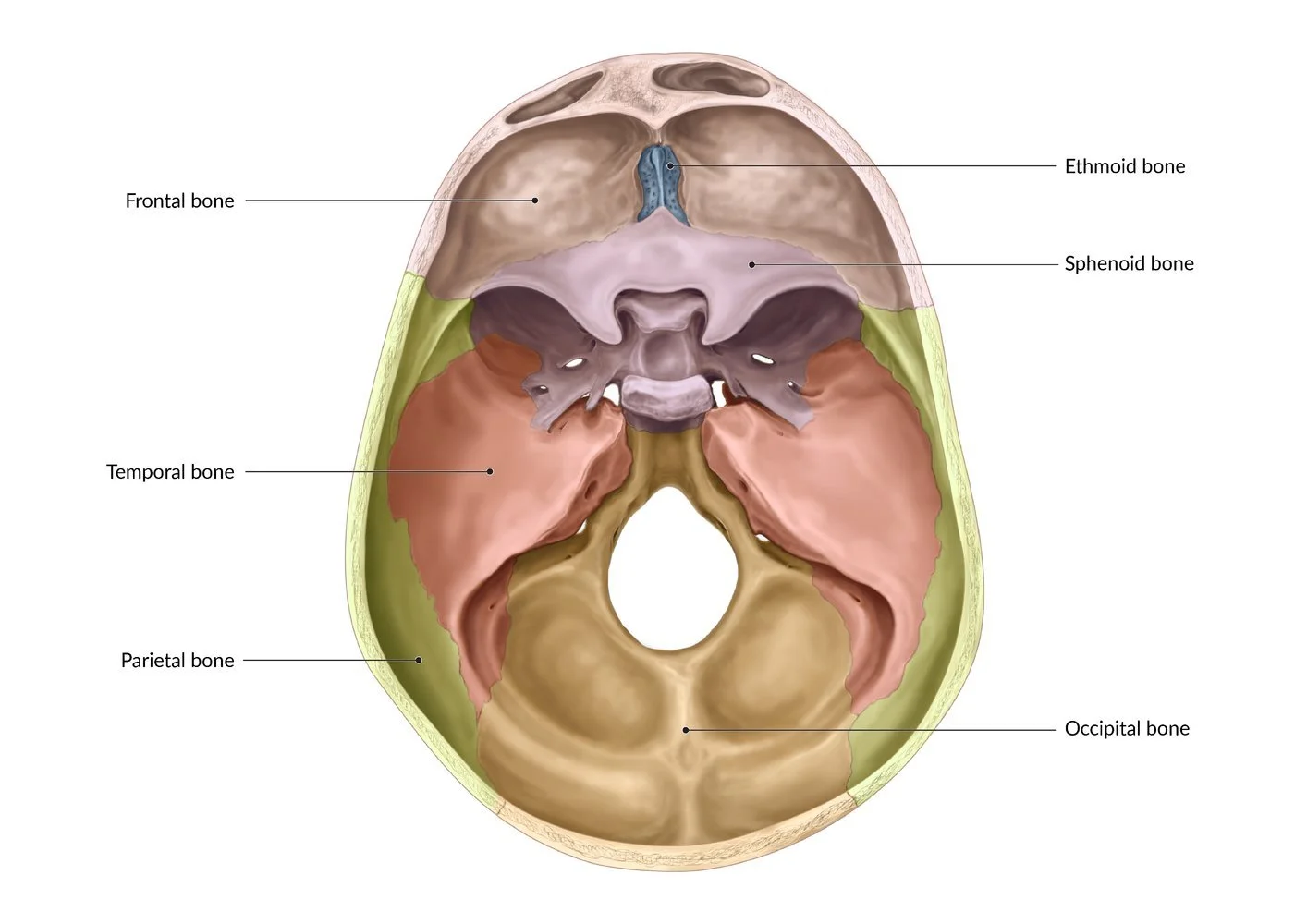
Cross-section of the cranium showing the joints between the various bones from an internal view.
Styles of Cranial Osteopathy
Cranial Osteopathy can be broken into two main styles of treatment. These are known as direct and indirect. In the simplest terms direct treatment is firmer, and indirect treatment is more gentle in its approach.
Direct Cranial: Direct cranial osteopathy is a firm style of treatment, it involves a strong grip on the skull and some sustained pressure. Your practitioner will ask you to breath through some of the positions while he waits for the release. The sensation will be like a massage for your head.
Indirect Cranial: Indirect cranial is a much subtler and more gentle style. It involves gentle holds on the skull while the practitioner applies very minor amounts of pressure. It feels more like having your head cradled while you meditate.
While both styles are working to achieve the same outcome they feel very different and they work well for different kinds of patients. If you love a deep tissue massage you will probably enjoy the direct style more, if you love yin-yoga and prefer your osteo treatment to be gentle and comfortable than indirect cranial may be best for you.
Summary
While cranial osteopathy (as with all treatment methods) is not a magic bullet or a fix all, many patients find great relief from combining it into their osteopathy treatments in conjunction with spinal manipulation, soft tissue techniques and other methods osteopaths use. Osteopaths are an incredibly versatile in the way they can approach a problem, this leads to great results for most patients they see. If you want to try some cranial treatment click here to book an appointment in our Tweed Heads clinic.